

Why Waldorf

Different for a reason
Why Waldorf? On first impression, Waldorf can seem a little curious. Or out of step with the times. Especially in a hyper-driven culture that stresses academic achievement over a more rounded sense of well being. The truth is that Waldorf Education is more relevant than ever.
The future you are leaving to your children will require more than book-smarts. It will call for courage, creativity and care. These are the precise qualities that Waldorf has nurtured for the past 100 years. Below is a selection of Waldorf ‘differences’ and the reasons they exist.
Why our students make their own textbooks
Instead of memorizing facts from textbooks in order to pass exams, our students internalize knowledge by hand writing and illustrating their own textbooks. This results in a library of beautiful, prideful work, and a vivid understanding of the subject matter.
Why our teachers stay with their class
Our teachers often stay with a class from first grade all the way through to graduation. This allows teachers to develop a better understanding of the class community, as well as a deeper understanding of each student.
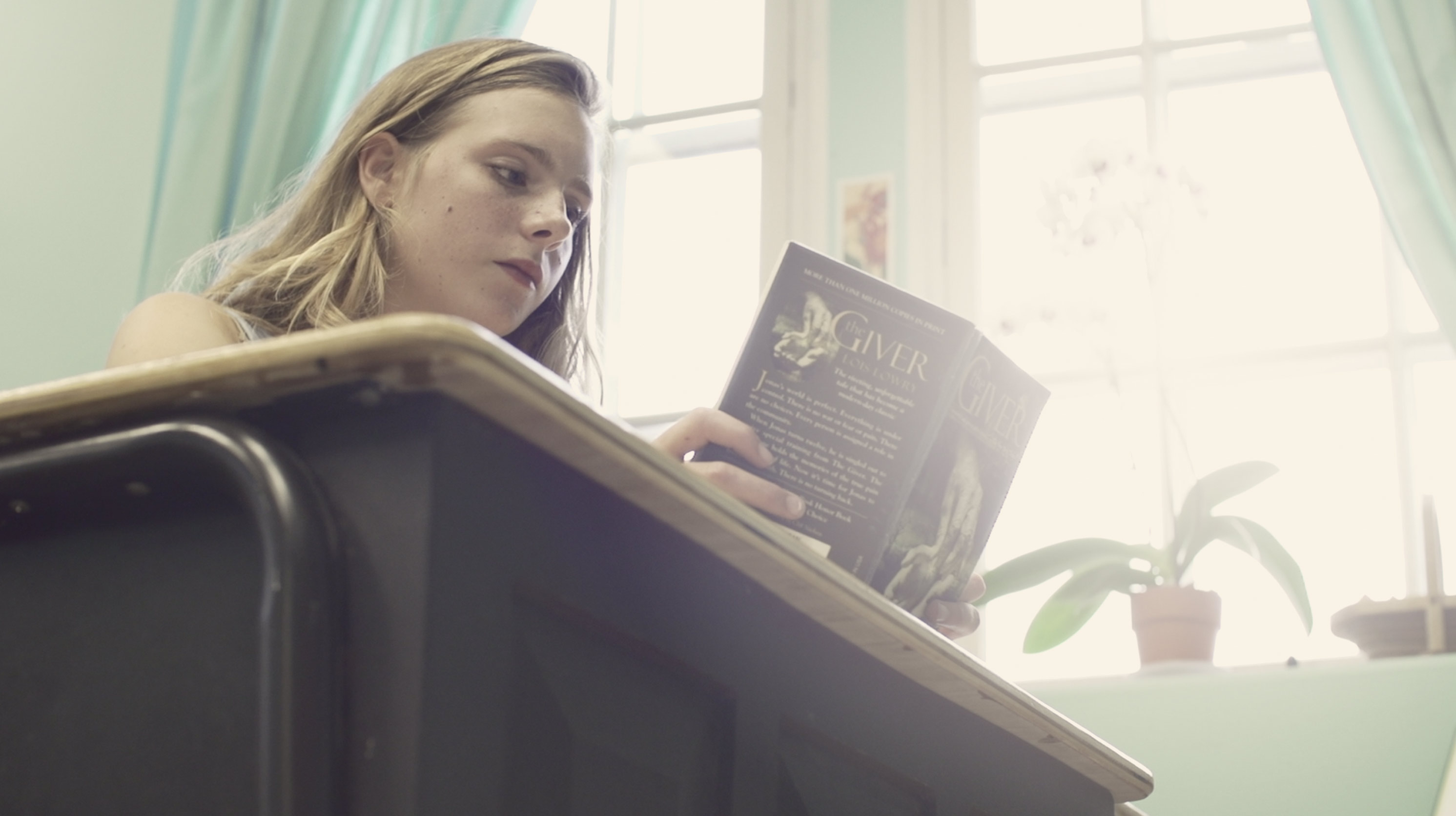
Why we take our time with reading
It’s a sad fact that reading ability has become a measure of how ‘advanced’ a child is in their development. Reading is too important to be rushed. Our goal is children who love to read. Ironically, like the Tortoise and The Hare, our graduates are often reading well ahead of their age group.
Why we keep technology out of the classroom
Technology is wonderful, and a big part of everyone’s lives. But we believe the rush to place tablets and laptops in the hands of seven-year olds is premature- the power of the technology drowns out other forms of sharing and absorbing information. Tellingly, the parents in our community who work in technology agree.
Why we knit
Why we have a circus
Our circus program builds physical coordination alongside life skills like risk taking and resilience. Stilts and unicycles test balance. Juggling demands hand eye coordination, concentration and dexterity. Clowning requires comic timing and emotional depth. Mistakes are inevitable, so students learn to remain centered, calm and ready to try again.
Why learning a stringed instrument is mandatory
Beginning in third grade, all students learn to play the cello, viola or violin. These instruments build strong listening skills as strings are adjusted and tuned. They also call for independent movement of both sides of the body, which helps develop neural pathways. And of course, learning an instrument, any instrument, rewards perseverance, expression and teamwork.
Why we have movement and games instead of traditional competitive sports
Sports that once taught children courage and teamwork are becoming so hyper-competitive, they are driving much of the joy from play. In the early grades, we focus physical activities on movement, co-ordination, and non-competitive teamwork. Only when the children have solidified their enjoyment of games do we add extra-curricular team sports such as soccer, basketball and volleyball.
Why we insist on recess
In the chase for higher standardized test scores, some schools are eliminating recess. But play is not expendable. It helps children learn important social skills, and develops the parts of the brain responsible for executive functioning, creative problem solving and self-control. Movement during recess helps children stay focused in class and helps them assimilate what they’ve learned. Plus, it’s a lot of fun.
Ideas in the Media
“We have to recognize that human flourishing is not a mechanical process; it’s an organic process. All you can do, like a farmer, is create the conditions under which they will begin to flourish.”
– Sir Ken Robinson on Ted.com
“Every kid starts out as a natural-born scientist, and then we beat it out of them. A few trickle through the system with their wonder and enthusiasm for science intact.”
– Carl Sagan in Psychology Today
“Minds need rest and work. But the iWorld fails to supply the child-mind with either of these basic needs.”
– David Gelernter, Professor of Computer Science at Yale in The Wall Street Journal
“Free play is nature’s means of teaching children that they are not helpless.”
– Peter Grey, Professor of Psychology at Boston University in The Atlantic
“The heightened pressure on child athletes to be, essentially, adult athletes, has fostered an epidemic of hyper-specialization that is both dangerous and counterproductive.”
– David Epstein, Author of The Sports Gene in The New York Times
“Creativity is essential to particle physics, cosmology, and to mathematics, and to other fields of science, just as it is to its more widely acknowledged beneficiaries- the arts and humanities.”
– Lisa Randall, Theoretical Physicist at Harvard University